Vertical AI Playbooks

15 min analyze 4 sections
Step 1 of 4

WHY WHY This Matters

Generic AI strategies fail. Every industry has unique:

  • Customer behaviors and expectations
  • Regulatory constraints
  • System landscapes
  • Competitive dynamics
  • Value chain positions

The enterprise architects who succeed don't apply one-size-fits-all AI playbooks. They develop vertical-specific strategies that account for industry realities.

In this module, we'll use retail and commerce as our vertical—but the frameworks apply to any industry.

Step 2 of 4

WHAT WHAT You Need to Know

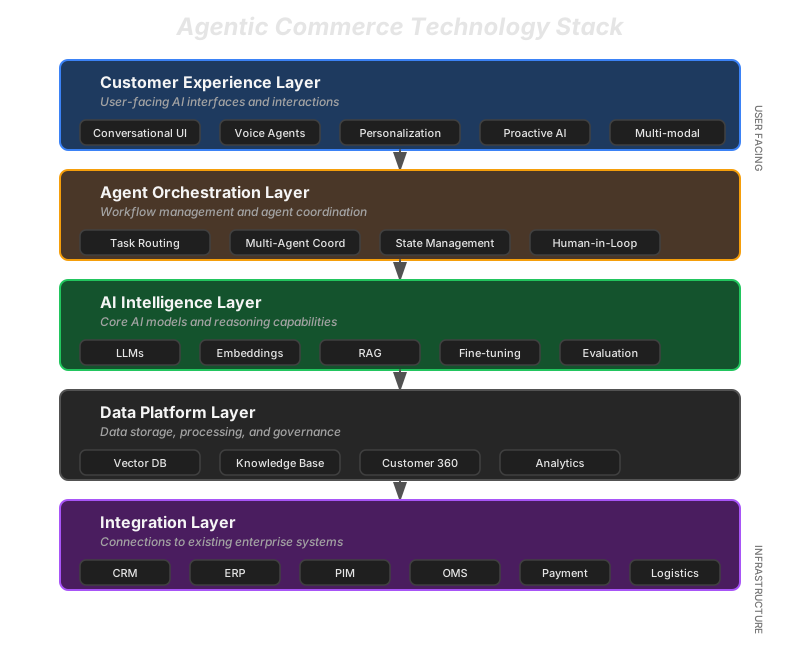
The Agentic Commerce Stack

Emerging Commerce Protocols

Three major protocols are shaping agentic commerce:

Protocol Provider Purpose
ACP (Agentic Commerce Protocol) OpenAI Enables ChatGPT to browse and purchase on behalf of customers
AP2 (Agent Payments Protocol) Google Lets Gemini make purchases with user-defined "mandates"
MCP (Model Context Protocol) Anthropic The "USB port" connecting LLMs to enterprise systems

Strategic implication: Retailers who implement these protocols become discoverable by AI shopping assistants. Those who don't become invisible.

The Retail AI Opportunity Map

The Retail System Landscape

Understanding key systems is essential for integration planning:

System Full Name Role in AI Strategy
PIM Product Information Management Source of truth for product data AI agents reference
CDP Customer Data Platform Provides customer context for personalization
OMS Order Management System Enables agents to check orders, process returns
ATP Available to Promise Real-time inventory data for accurate availability
CMS Content Management System Houses editorial content AI agents cite

Critical insight: AI agents are only as good as the data they access. Poor PIM data = poor recommendations. Outdated inventory = broken promises.

Building the Vertical Playbook

A complete vertical playbook addresses:

1. Opportunity Assessment

  • Which AI use cases align with vertical dynamics?
  • Where are the highest-value opportunities?
  • What are the vertical-specific risks?

2. Data Readiness

  • What data is needed for priority use cases?
  • Is the data quality sufficient?
  • What integrations are required?

3. System Architecture

  • How will AI agents connect to existing systems?
  • What new infrastructure is needed?
  • How will real-time data be provided?

4. Regulatory Considerations

  • What vertical-specific regulations apply?
  • How do AI governance requirements differ?
  • What compliance controls are needed?

5. Competitive Dynamics

  • Who are the AI leaders in this vertical?
  • What capabilities are becoming table stakes?
  • Where can differentiation be achieved?

Retail-Specific Considerations

Product information quality matters enormously:

  • AI agents cite what's in your PIM
  • Incomplete specs = lost recommendations
  • Inaccurate data = customer complaints

Real-time data is critical:

  • "Is this in stock?" requires live ATP
  • Price changes must propagate immediately
  • Promotion eligibility must be accurate

Customer context enables personalization:

  • Previous purchases inform recommendations
  • Loyalty status affects offers
  • Browse history guides suggestions

Guardrails prevent brand damage:

  • Agents must not recommend competitors
  • Pricing errors must be caught
  • Returns policy must be accurate

The Agentic Commerce Readiness Assessment

Dimension Low Readiness Medium Readiness High Readiness
Product Data Incomplete, inconsistent Mostly complete, some gaps Comprehensive, structured
Inventory Data Batch updates Near-real-time True real-time ATP
Customer Data Siloed systems Partially unified Full CDP integration
API Infrastructure Limited, legacy Modern APIs, some gaps Comprehensive, documented
Content Authority Thin, generic Some expert content Authoritative, cited

Key Concepts

Key Concept

agentic stack

Before building a vertical playbook, understand the technology layers:

Agentic Commerce Technology Stack showing five layers: Customer Experience, Agent Orchestration, AI Intelligence, Data Platform, and Integration
The Agentic Commerce Stack: Five layers from customer experience to enterprise integration

Each layer has specific design considerations for your vertical.

Key Concept

retail opportunity map

AI opportunities in retail cluster into five domains:

1. Discovery & Recommendation

  • Conversational product search
  • Personalized recommendations
  • Visual search and style matching
  • Gift recommendation assistants

2. Customer Service

  • Order inquiry handling
  • Return/exchange processing
  • Product question answering
  • Complaint resolution

3. Operations & Supply Chain

  • Demand forecasting
  • Inventory optimization
  • Supplier communication
  • Logistics coordination

4. Merchandising

  • Price optimization
  • Assortment planning
  • Promotion effectiveness
  • Competitive analysis

5. Content & Marketing

  • Product description generation
  • Marketing copy creation
  • Review analysis and insights
  • Personalized email content
Step 3 of 4

HOW HOW to Apply This

Exercise: Build a Retail AI Playbook

Vertical Playbook Template

VERTICAL AI PLAYBOOK: [Industry/Segment]
━━━━━━━━━━━━━━━━━━━━━━━━━━━━━━━━━━━━━━━━━━━━━━━

VERTICAL CONTEXT
Industry dynamics: [Key characteristics]
Customer expectations: [What customers expect from AI]
Regulatory environment: [Key constraints]
Competitive landscape: [Who's leading, what's table stakes]

OPPORTUNITY PRIORITIZATION
┌──────────────────────┬──────────┬───────────┬──────────┐
│ Opportunity          │ Value    │ Readiness │ Priority │
├──────────────────────┼──────────┼───────────┼──────────┤
│                      │  H/M/L   │   H/M/L   │   1-5    │
│                      │          │           │          │
│                      │          │           │          │
└──────────────────────┴──────────┴───────────┴──────────┘

DATA READINESS
| Data Domain | Quality | Gap | Remediation |
|-------------|:-------:|-----|-------------|
| Product     |  1-5    |     |             |
| Customer    |  1-5    |     |             |
| Inventory   |  1-5    |     |             |
| Content     |  1-5    |     |             |

SYSTEM ARCHITECTURE
[Diagram or description of integration approach]

REGULATORY REQUIREMENTS
• [Requirement 1]
• [Requirement 2]
• [Requirement 3]

COMPETITIVE STRATEGY
Differentiation focus: [Where to win]
Table stakes: [Must-have capabilities]
Watch list: [Emerging threats]

ROADMAP OVERVIEW
Phase 1 (Q1): [Focus]
Phase 2 (Q2): [Focus]
Phase 3 (Q3-Q4): [Focus]

━━━━━━━━━━━━━━━━━━━━━━━━━━━━━━━━━━━━━━━━━━━━━━━

Self-Check


Practice Exercises

Scenario: You're the enterprise architect for a specialty outdoor gear retailer:

  • 120 stores, strong e-commerce (40% of revenue)
  • Loyal customer base, premium positioning
  • Extensive product knowledge requirements
  • Seasonal demand patterns

Part 1: Opportunity Assessment

Rank these opportunities for your vertical (1=highest priority):

Opportunity Priority (1-5) Why?
Conversational product advisor
Customer service automation
Demand forecasting
Product description generation
Review analysis for merchandising

Part 2: Data Readiness Assessment

For your top 2 opportunities, assess:

OPPORTUNITY 1: _________________________

Required Data:
• _________________________
• _________________________
• _________________________

Current Quality (1-5): ___
Gap Description:
_________________________________________

Integration Required:
• _________________________
• _________________________

Part 3: Architecture Sketch

For your top opportunity, outline:

AGENT ARCHITECTURE
━━━━━━━━━━━━━━━━━━━━━━━━━━━━━━━━━

Customer Touchpoint:
[Where will customers interact?]

Agent Capabilities:
• [Capability 1]
• [Capability 2]
• [Capability 3]

Required System Integrations:
• [System 1] → [What data/actions?]
• [System 2] → [What data/actions?]

Guardrails Needed:
• [Guardrail 1]
• [Guardrail 2]

Success Metrics:
• [Metric 1]
• [Metric 2]
━━━━━━━━━━━━━━━━━━━━━━━━━━━━━━━━━

Part 4: Competitive Analysis

Research (or hypothesize) how competitors are using AI:

Competitor AI Capability Threat Level
REI H/M/L
Patagonia H/M/L
Amazon H/M/L
Direct-to-consumer brands H/M/L
Step 4 of 4

GENERIC Up Next

In Module 6.3: Portfolio Strategy, you'll learn how to evaluate and prioritize across multiple AI initiatives, balancing innovation investments with operational improvements.

Module Complete!

You've reached the end of this module. Review the checklist below to ensure you've understood the key concepts.

Progress Checklist

0/6
0% Complete
0/4 Sections
0/2 Concepts
0/1 Exercises