Portfolio Strategy

14 min evaluate 4 sections
Step 1 of 4

WHY WHY This Matters

Organizations don't have one AI opportunity—they have dozens. Each one competes for:

  • Budget
  • Talent
  • Leadership attention
  • Change capacity

The enterprises that succeed don't just pick "good" AI projects. They build balanced portfolios that:

  • Deliver near-term value
  • Build long-term capability
  • Manage risk appropriately
  • Learn systematically

Thinking at portfolio level is what separates operators from strategists.

Step 2 of 4

WHAT WHAT You Need to Know

The AI Investment Horizon Framework

The Portfolio Prioritization Matrix

Evaluate initiatives across two dimensions:

Strategic Value:

  • Revenue impact
  • Cost reduction
  • Competitive advantage
  • Customer experience improvement
  • Capability building

Execution Feasibility:

  • Data readiness
  • Technical complexity
  • Organizational readiness
  • Resource availability
  • Risk level
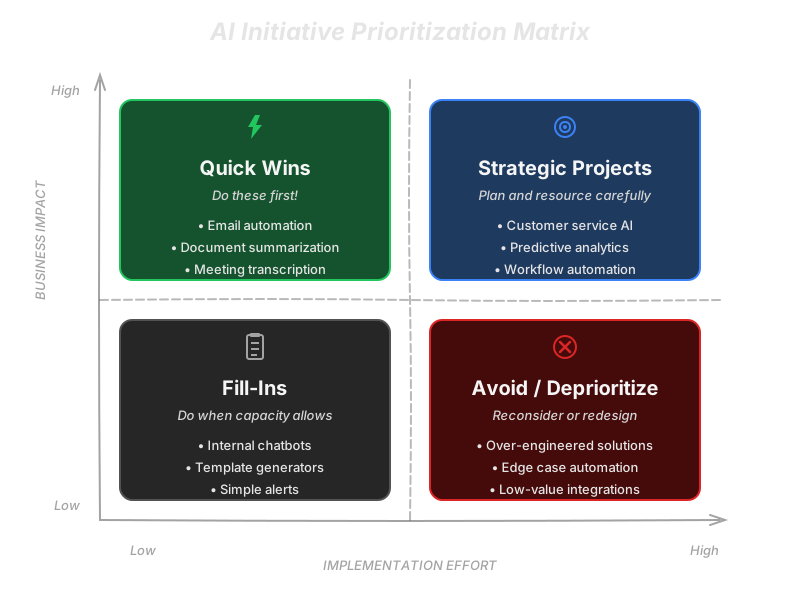
AI Initiative Prioritization Matrix showing four quadrants: Quick Wins (high impact, low effort), Strategic Projects (high impact, high effort), Fill-Ins (low impact, low effort), and Avoid (low impact, high effort)
Prioritization Matrix: Evaluate initiatives by impact and effort

Quick Wins: Do now—high value, easy to execute Big Bets: Invest carefully—high value, requires significant effort Maybe Later: Consider if resources allow—lower value but achievable Avoid: Don't pursue—low value and difficult

Portfolio Balance Indicators

Indicator Healthy Unhealthy
Horizon mix 70/20/10 100% H1 or 50%+ H3
Quick wins 3-5 active 0 or 10+
Big bets 1-2 active 0 or 5+
Risk distribution Varied All high or all low
Learning rate Weekly insights Quarterly at best

The Value-Risk Tradeoff

Learning Portfolio Management

AI portfolios must generate learning, not just ROI:

Every initiative should answer questions:

  • What did we learn about this use case?
  • What capability did we build?
  • What patterns can we reuse?
  • What should we do differently next time?

Structure for learning:

  • Clear hypotheses before launch
  • Defined success metrics
  • Regular retrospectives
  • Knowledge capture and sharing

The Anti-Patterns

Anti-Pattern Problem Solution
Pilot purgatory Many pilots, nothing scales Clear scale criteria, kill or scale decisions
Big bang syndrome All investment in one moonshot Balanced portfolio with quick wins
Risk aversion Only safe bets, no innovation Protected budget for H2/H3 experiments
Flavor of the month New priorities constantly Stable investment thesis, regular reviews
Isolated initiatives No learning transfer Portfolio-level governance and sharing

Key Concepts

Key Concept

investment horizons

Balance investments across three horizons:

Horizon 1: Optimize (0-6 months)

  • Improve existing processes with AI
  • Low risk, proven patterns
  • Quick wins that build credibility
  • Examples: Content generation, document processing, customer service automation

Horizon 2: Extend (6-18 months)

  • Expand AI into new areas
  • Moderate risk, emerging patterns
  • Significant capability building
  • Examples: Conversational commerce, predictive analytics, workflow automation

Horizon 3: Transform (18+ months)

  • Fundamental business model innovation
  • Higher risk, unproven patterns
  • Strategic differentiation
  • Examples: Agentic commerce, autonomous operations, new AI-native products

A healthy portfolio typically allocates:

  • 70% to Horizon 1 (optimize)
  • 20% to Horizon 2 (extend)
  • 10% to Horizon 3 (transform)
Key Concept

value risk

Every AI initiative sits on a value-risk curve:

Low Risk / Low Value:

  • Internal productivity tools
  • Back-office automation
  • Non-customer-facing applications
  • Limited scope/scale

Medium Risk / Medium Value:

  • Customer-facing assistance (human backup)
  • Recommendation systems
  • Content generation with review
  • Operational improvements

High Risk / High Value:

  • Autonomous customer interactions
  • Real-time decision systems
  • Business model innovation
  • Large-scale deployments

The portfolio question isn't "which has the best ROI?" but "what mix of risk/reward fits our strategy and capacity?"

Step 3 of 4

HOW HOW to Apply This

Exercise: Build Your AI Portfolio

Portfolio Review Template

QUARTERLY PORTFOLIO REVIEW
━━━━━━━━━━━━━━━━━━━━━━━━━━━━━━━━━━━━━━━━━━━━━━━

PORTFOLIO HEALTH

Active Initiatives: ___
Budget Allocated: $___
Budget Spent: $___
Team Capacity: ___% utilized

Horizon Mix:
H1: __% (target: 70%)
H2: __% (target: 20%)
H3: __% (target: 10%)

INITIATIVE STATUS

| Initiative | Status | Budget | Value Delivered | Learning |
|------------|--------|--------|-----------------|----------|
|            | 🟢🟡🔴 |        |                 |          |
|            | 🟢🟡🔴 |        |                 |          |
|            | 🟢🟡🔴 |        |                 |          |

DECISIONS NEEDED

Scale:
• [Initiative ready to scale]

Kill:
• [Initiative to stop]

Pivot:
• [Initiative to redirect]

New:
• [New investment to consider]

KEY LEARNINGS

What we learned this quarter:
1.
2.
3.

Patterns to reuse:
1.
2.

Mistakes to avoid:
1.
2.

NEXT QUARTER PRIORITIES

1.
2.
3.

━━━━━━━━━━━━━━━━━━━━━━━━━━━━━━━━━━━━━━━━━━━━━━━

Self-Check


Practice Exercises

Context:

  • $500M revenue specialty retailer
  • AI budget: $2M annually
  • Team: 3 AI resources, can hire 2 more
  • Current AI maturity: Early (few pilots, no production)

Step 1: Generate the Opportunity List

Brainstorm 10+ AI opportunities across:

  • Customer experience
  • Operations
  • Merchandising
  • Marketing
  • Back office
# Opportunity Domain
1
2
3
4
5
6
7
8
9
10

Step 2: Score Each Opportunity

Rate 1-5 on each dimension:

# Strategic Value Feasibility Total Horizon
1 H1/H2/H3
2 H1/H2/H3
3 H1/H2/H3
4 H1/H2/H3
5 H1/H2/H3
6 H1/H2/H3
7 H1/H2/H3
8 H1/H2/H3
9 H1/H2/H3
10 H1/H2/H3

Step 3: Assign to Quadrants

Place each opportunity:

QUICK WINS (Do Now):
•
•
•

BIG BETS (Invest Carefully):
•
•

MAYBE LATER:
•
•

AVOID:
•
•

Step 4: Build the Portfolio

Allocate your $2M budget:

Investment Initiative Budget Team Horizon
1 $ FTE
2 $ FTE
3 $ FTE
4 $ FTE
5 $ FTE
Total $2M 5

Step 5: Validate the Mix

Check your portfolio balance:

Horizon Target Your Allocation
H1 (Optimize) 70% %
H2 (Extend) 20% %
H3 (Transform) 10% %
Check ✓/✗
At least 2 quick wins included
At most 1-2 big bets
Risk is distributed
Learning opportunities identified
Step 4 of 4

GENERIC Up Next

In Module 6.4: Operating Models for AI, you'll learn how to design the organizational structures, processes, and governance that enable AI to scale across the enterprise.

Module Complete!

You've reached the end of this module. Review the checklist below to ensure you've understood the key concepts.

Progress Checklist

0/6
0% Complete
0/4 Sections
0/2 Concepts
0/1 Exercises